
senerıs
Most internal software waits to be opened. Someone builds a dashboard because the team needs visibility, and then the dashboard needs a person to remember it exists, keep it current, and notice what changed. It usually costs more attention than it saves.
We build the other kind. Systems that watch a body of work over time and come to you when there is something worth saying — and that say one thing, not forty.
We work remotely from Maastricht with small teams across Europe and the US. We do our best work as the embedded senior on an ambitious team: the person who designs the system, ships the first version, and brings everyone else along.
Agents that observe
Most agent projects produce more output than anyone reads. The useful ones do the opposite: they watch something over time and say a small amount, unasked, at the moment it matters. That takes a memory system as much as a model, because you cannot describe a pattern you haven't watched accumulate. The interesting work isn't the prompt — it's the system around the model: guardrails, observability, versioning, and the slow accumulation of judgment about what these systems do well and what they don't.
Telling whether it's working
The hardest question in this field right now isn't how to build an agent. It's how to tell whether the thing it produced is actually saying anything. Fluent output is cheap and increasingly hard to evaluate. We spend as much time deciding what to stop building as what to build, and we'll tell you when the answer is that you don't need this.
Senior full-stack engineering
A decade of React, Next.js, Node, TypeScript, and AWS — HIPAA-compliant SaaS, real-estate platforms, healthcare integrations, analytics infrastructure. We work best when a team needs someone who can architect the system, ship the first version, and bring the junior engineers up alongside.
Educational technology
Half of the studio is learning design (M.A. from NYU Steinhardt, elementary-classroom experience). We build software around how people actually learn, and we have a point of view on what AI should and shouldn't do pedagogically — a position the field is still working out, and one we think matters more, not less, as the tools get more capable.
Conversational AI for a B2B analytics platform
A long-running project with an American analytics company that wanted to let end users ask questions of a large dataset in natural language. We built the system end-to-end on Vercel's AI SDK: model-agnostic across OpenAI and Bedrock, natural-language-to-Elasticsearch as a schema-driven system rather than a prompt, dynamic chart selection by the agent, multi-agent handoff with intent cross-validation, and chat-triggered PDF reporting. What made it work wasn't any single technique. It was treating the LLM as one component in a larger system — with proper guardrails, observability, and versioned configurations — rather than as a magic box.
A workshop platform for the writing community
A small, opinionated platform for running writing workshops the way working writers actually run them, rather than the way generic LMS software assumes. Useful here mostly for the through-line: we build software around how people do the thing, not around the conventions of the software category.
DAFTConnect — a networking community for Americans on the DAFT visa. On the App Store.
Fluent By Choice — a language learning app built around branching stories, where the studio’s learning-design and engineering sides meet. In testing on TestFlight.
sleepmixer — a small utility that takes a track apart and lets the pieces decay at different rates. Open source, runs locally.
We're a small studio, deliberately. The work we take on tends to have some ambiguity in it — a defined scope with a real customer at the other end, a team that values judgment as well as throughput, and a problem that's interesting to do well. We don't staff for volume.
We work remotely from the Netherlands and are comfortable in fully distributed teams and written-first cultures — the kind that produces decisions other people can still read six months later. We operate as a Dutch B.V. for European clients. US clients invoice in dollars to a US bank account — the same setup as during the decade we worked from the US.
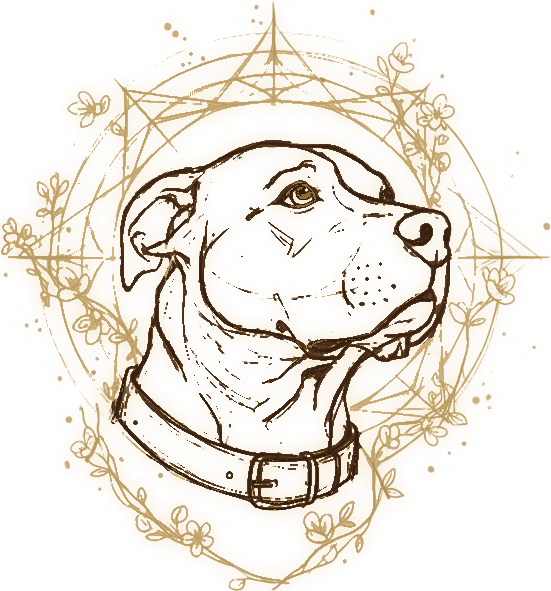
We offer free or reduced-rate work to animal rescue organisations and bully-breed advocacy groups.
seneris.nl
We take on a small number of new clients each year. A short note about what you’re building, what’s hard about it, and what kind of help you’d want is the best place to start.